About the DS200AAHAH2A
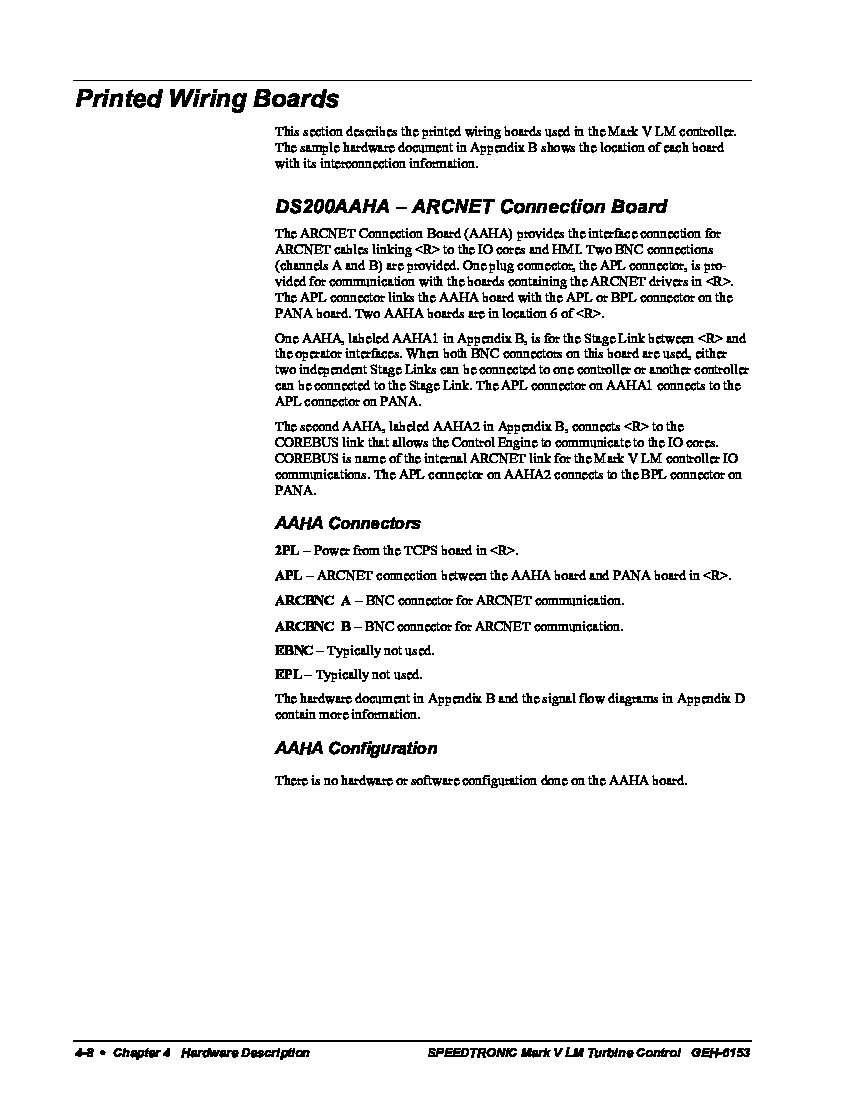
The DS200AAHAH2A is a very simple board. It has two different connections on its top edge. On the top right corner is the ARCBNC-A port and to the left of it is the ARCBNC-B port. These provide ARCNET communication. On the face of the board are two different connection ports. In the middle of the bottom edge is an APL 10-Pin port. And then finally, in the right bottom corner is a 2PL connection port that provides power to the <R> core form the TCPS board. After this board is connected to the other hardware, there are no further modifications of software that is needed for it to function properly.
Fortunately for our sakes, this DS200AAHAH2A printed circuit board is offered alongside a series of Mark V Turbine Control System Series connectors that can be utilized for convenient and voltage-protected interfacing within the Mark V Series automated drive assembly. Some of this DS200AAHAH2A ARCNET HUB LAN Driver Boards' various connectors include:
- The 2PL TCPS Board Power Signals Connector
- The APL AAHA to PANA Board ARCNET Connector
- The ARCBNC A ARCNET Communication BNC Connector
- The ARCBNC B ARCNET Communication BNC Connector
- The EBNC Connector
- The EPL Connector
All of the above-listed connectors in this DS200AAHAH2A board's assembly have been named through a combination of their factory-printed nomenclature labels, their Mark V Series interfacing potentials, and their specific functionality in terms of the greater Mark V Turbine Control System Series, spare the EBNC and EPL connectors; which have not been named as they typically go unused during normative functionality of the DS200AAHAH2A board. The DS200AAHAH2A provides a very necessary function within the Mark V control panel.
DS200AAHAG2A Device Functional Role
It was initially designed to give ARCNET connection and communication to the internal devices within a <R> core. It has the power to link the main Control Engine within the <R> core to the I/O cores that are also in the <R> core. It can also link the control engine to external devices. The <R> core actually needs two different DS200AAHAH2A boards to function. These boards provide different types of connections for the <R> core:
- One connects the <R> core to the COREBUS and to the PANA board
- The other creates a Stage Link between user interfaces and the <R> core