Serial to Ethernet Converters: What to Know

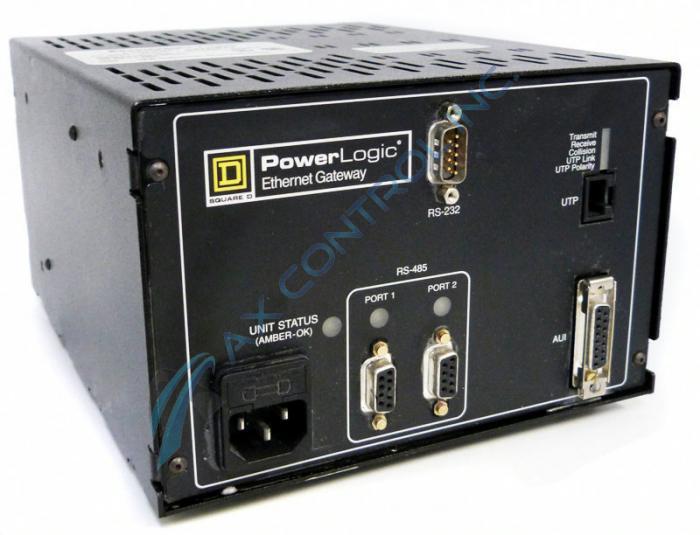
3050 EGW1
This Square D PowerLogic 3050 Ethernet Gateway is a type of Serial to Ethernet Converter.

A Serial to Ethernet converter is typically used when you need to connect a device with a serial interface to a remote computer. These remote connections are common in industrial settings where constant, reliable connectivity is important.

Serial device servers can extend the lifespan of industrial control systems. Additionally, through the use of these systems legacy serial devices maintain their usefulness. Manufacturers can improve device management and data acquisition through the addition of Ethernet serial servers.

There are three types of Serial to Ethernet adapters. They are:

RS-232 to Ethernet, RS-422 to Ethernet, RS-485 to Ethernet Converter

Use devices like this to convert TCP/IP packets to serial data and back. They work in both directions. This allows serial devices like barcode scanners, sensors, or serial printers to communicate with a central (remote) computer. Conversely, it allows the computer to communicate with those serial devices. RS-232 to Ethernet uses software to identify itself as a virtual COM port to the computer.
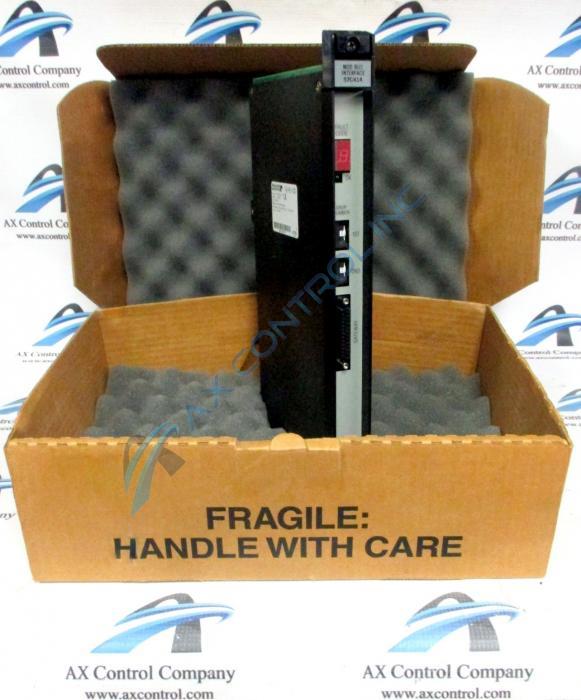
57C414
The Automax 57414 is a Modbus Interface gateway.

Modbus TCP/IP gateways

Simply, a Modbus TCP/IP gateway is a Modbus RTU protocol running on Ethernet with a TCP interface. These devices use MODBUS messaging and TCP/IP protocols to connect PLCs, Input/Output modules, and gateways to simple field buses. Modbus data transactions are resistant to noise disruption.

Serial Bridge or Serial Tunnel connections

It’s also possible to use two device servers as a pair connection through an Ethernet TCP/IP network. Serial Bridge connections are protocol independent and don’t require routing configuration. Serial Bridge/Serial Tunnels will typically have Rx and Tx outputs. They may be powered over Ethernet or through a DC jack.

Mainframe computers, servers, or serial devices without Ethernet capability use Serial Bridge and Serial Tunnel connections. Configurations allow fixed-function controllers to be used in various ways (USB to SPI, USB to UART) without any user-developed firmware.

If you have questions about connectivity devices for your industrial location, reach out to our team today. We can help!
The Most Important Factor When Choosing a Motor Drive

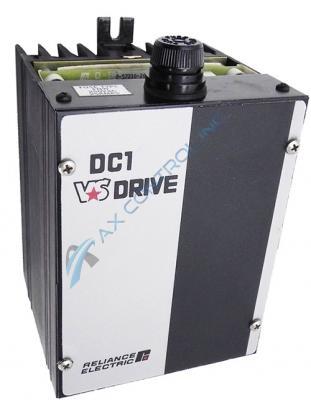
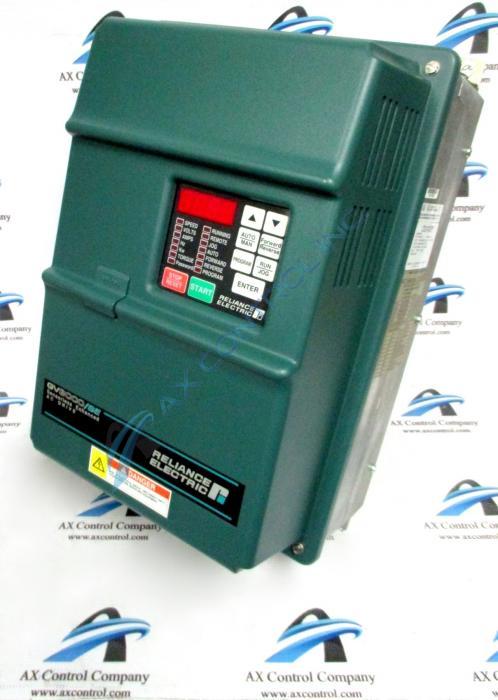
Close up of a Reliance Electric GV3000 Motor Drive
A motor drive can run on DC power, or use AC power like the 15V4150 GV3000 Drive from Reliance.

There are several things to consider when sourcing a drive to use with a motor.  These include

  • Function.  What will the components be doing?  Make sure to choose drives and motors designed for the same purpose. 
  • Location.  Industrial components are specifically designed to hold up to the more rigorous demands of the factory floor.  Some products may be rated for outdoor use while others might be restricted to inside locations only. 
  • Compatibility. Unless you need a conversation-starting paperweight, an incompatible drive is worthless. 
  • Cost. What’s your budget?  Hint: this is where reconditioned and surplus products really shine.  They’re often a fraction of the cost of new.

While all of these factors are important and should be a part of your decision-making process, none of them make the top of the list. 

So what does? 

Current and Voltage.  

Always be sure as you look at drives that their output voltage meets the input voltage rating of your motor.  

Also, be sure the drive’s output current rating meets or exceeds the FLA (full load amperes) rating of the motor.  You can typically find the FLA on the motor’s nameplate data. 

If you have more questions about sourcing the correct motor–or any other product–for your needs, contact our team today.

A Quick Primer on Servo Position Controllers

Servo systems are widely used in manufacturing, laser processing equipment, industrial robotics, and various robotic and motor applications.  But if you’re just starting to dip your foot into the world of servos there are plenty of terms you probably have never heard of. 

A servo position controller (plc servo motor kontrolü)
Servo position controller.

Here’s a short overview of some of the most common servo-related questions.  Reading through these snapshots should help you understand some of the most common terms related to servos. 

What is a servo system? 

A servo system, or servo mechanism, includes a moving device, a sensor, and some sort of logic that can compare a desired set point to an actual point, then drive the moving device until the desired and actual match.  

In real terms, this usually means the moving device is an electric motor, the sensor is an encoder, and the logic is supplied by a motion controller.  

What is a motion controller? 

Motion controllers create controlled motion profile sequences for other devices while monitoring and adjusting for speed and position errors.   These are the brain of a motion control system and typically work as a closed circuit, comparing feedback signals to actual output so as to reduce errors to zero.  

A number of different kinds of motion controllers exist.  This includes autonomous controllers, PC-based controllers, and microcontrollers, or MCUs.  These controllers can be open loop or closed loop systems. 

What’s the difference between an open-loop and a closed-loop system? 

Open loop systems are simple and cheap, but don’t rely on feedback loops for adjustment.  Closed-loop systems tend to be more complex and more expensive, but can also offer more finely-tuned outputs.  Here’s an example of the difference between the two. 

It’s July and your air conditioner suddenly dies.  You go out and buy two fans, one for your living room and one for your bedroom.  The living room fan is a cheap box fan with an on/off switch, but the one for the bedroom actually has a thermostat that controls the fan.   

All day long, both fans run.  As night falls and the temperature begins to drop, the box fan in the living room keeps going, even though now the surrounding temperature has gotten so comfortable the moving air is too much all the time.  But the bedroom fan is different.  It’s cycling on and off, keeping that room at a nice temperature.  If the room starts to heat back on it kicks back on for a few minutes, but otherwise, it takes a break.  

That’s the difference between an open-loop (no feedback) and a closed-loop (with feedback) system. 

What’s the difference between servo brushed and brushless systems?

Most motors used in servo systems tend to be brushless but from time to time you may come across a brushed permanent magnet motor. What’s the difference?

Brushed DC motors are built using wound wire coils, called an armature. These work as an an electromagnet inside the motor that work against the magnets located on the outside of the motor. A rotary switch called a commutator reverses the polarity of the armature twice per cycle. This is what creates the current running through the brushed motor.

By contrast, the brushless motor has a magnet as its external rotor. Inside it has a specialized sensor that tracks the rotor position and three phases of driving coils. These coils are activated one after another by the controller via reference signals.

Other terms to research

If you want a deeper understanding of servo position controllers, we suggest doing independent research on these terms:

  • Accumulated Pulse
  • Angular Position
  • Deviation Counter
  • Encoder
  • Gain Adjustment
  • Incremental Encoder
  • PID Control
  • Position Control
  • Resolution
  • Speed Control

Contact AX Control today for your Servo and motor needs.