Cardboard is Everywhere These Days

A person buried under cardboard boxes.
The number of boxes can become overwhelming.

As we all adjust to new rules for social distancing in this new economy, the corrugated box industry has worked tirelessly to move necessary products safely from place to place. Not only do businesses rely on well-made cardboard packaging for the shipment of goods, but hospitals and pharmacies also receive essential products like masks and medicines in carefully packed shipments. Now, too, many individuals have turned to online venues to provide them with cleaning supplies, food, and paper goods, increasing the demand for cardboard shipping boxes.

How are boxes made?

Cardboard manufacturers use recycled or virgin paper to create a flute. That’s the name of the wave-shaped structure you see inside the walls of a cardboard box. Paper feeds through a corrugated roller machine to make the fluted cardboard. The roller machines use a similar technique previously used to add ruffles to hats. Many different kinds of flutes provide different levels of strength and cushioning to finished boxes. Boxes can have one or two layers of fluting.

Continue reading “Cardboard is Everywhere These Days”
How Model T Thinking Shapes 21st-Century Manufacturing

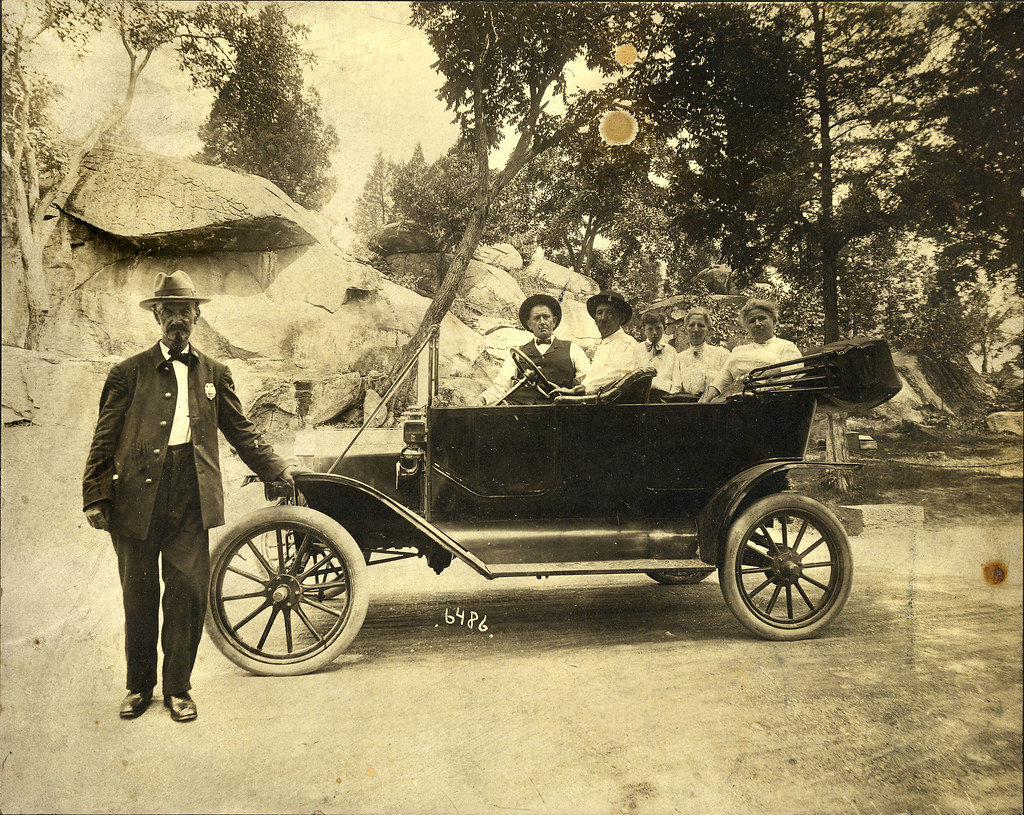
21st-century manufacturing is based in 20th century tech like the Model T.  Tourists at Gettysburg in a Ford Model T.
“Tourists in a Ford Model T at the ‘Devil’s Den’ at Gettysburg Battlefield in Pennsylvania, c1910-1915” by crackdog is marked under CC PDM 1.0. To view the terms, visit https://creativecommons.org/publicdomain/mark/1.0/

One of the greatest challenges for any successful business is knowing when it’s time to change.  After all, conventional wisdom says “if it’s not broke, don’t fix it.”   But with 21st-century manufacturing technology changing at such a rapid pace, those who stand still will soon be left behind. 

The last time the world saw technological advancements at this pace, Henry Ford was just figuring out the assembly line.  By looking back at Ford’s adoption of the new technology of his time we may be able to learn how to properly read today’s technological trends. This knowledge will help prepare us for investing in AI and automation at the most advantageous time for our manufacturing, warehousing, and distribution systems.  

Leverage Automation

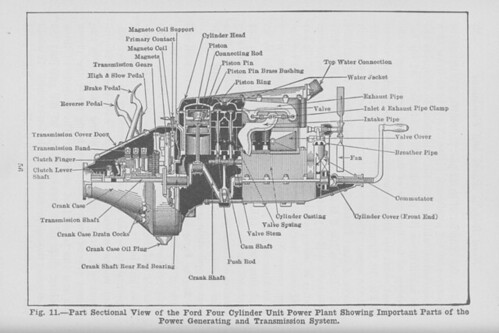
Sectional view of an early Ford Engine.  21st-century manufacturing built upon 20th century ideas.
“In the Ford Model T, the transmission, magneto, and engine were mounted together as a unit, all lubricated by the same oil” by The Henry Ford is licensed under CC BY-NC-SA 2.0

Henry Ford was not a newcomer to the car business when he began producing the Model T in 1908.  Before starting the Ford Motor Company, Henry worked for several other automotive companies where he contributed to the creation of the Quadricycle and the Ford 999. But he dreamed of a vehicle for ‘the great multitude,’  and so the Model T was born. 

Unfortunately,  the original Model T was still too expensive for most Americans.  When Ford began churning the cars out via assembly line, however, their price dropped significantly. 

In 1909, workers were using traditional methods to piece cars together. That year, a Model T cost $825. Production was under 11,000 units. But in 1916, three years after Ford started using assembly line production,  the Ford Motor Company produced over half a million Model Ts. Each one sold for $345.

Continue reading “How Model T Thinking Shapes 21st-Century Manufacturing”

Automated Robots Can Help Plants Grow

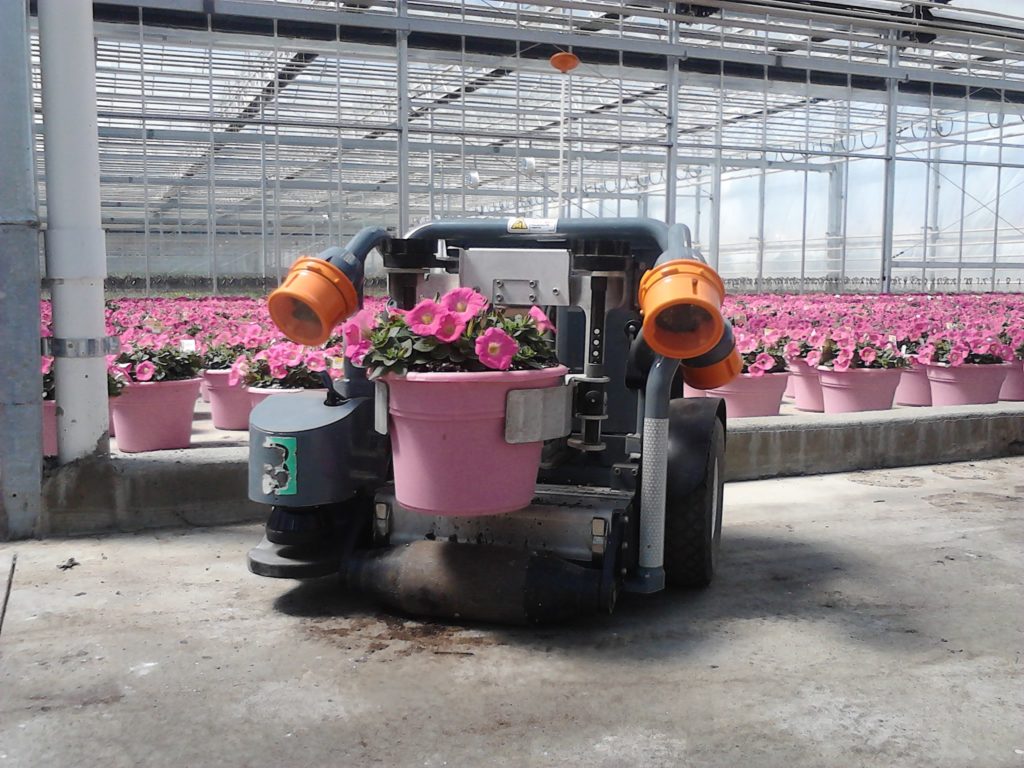
Automated Robots move potted plants.
The HV-100 “Harvey,” specifically designed for moving and spacing plants.

There are many examples of how tech has changed agriculture to improve efficiency. Investment in specialized technology for “doing one thing better” is increasing. More specialized business models have cropped up. With these, specialized skills and equipment supporting IoT wireless data transfer are increasingly important.

More and more, ag businesses have turned to AI, machine learning, and robots for certain necessary tasks.  Automated robots use specialization to become proficient at one particular job.   One example of this is Harvest Automation’s container-moving robot.  Weighing in at just about one hundred pounds, the not-quite two-foot-tall robot works in greenhouse and nursery environments to properly space out container plants.

Continue reading “Automated Robots Can Help Plants Grow”